Research Biography
Postdoctoral Research
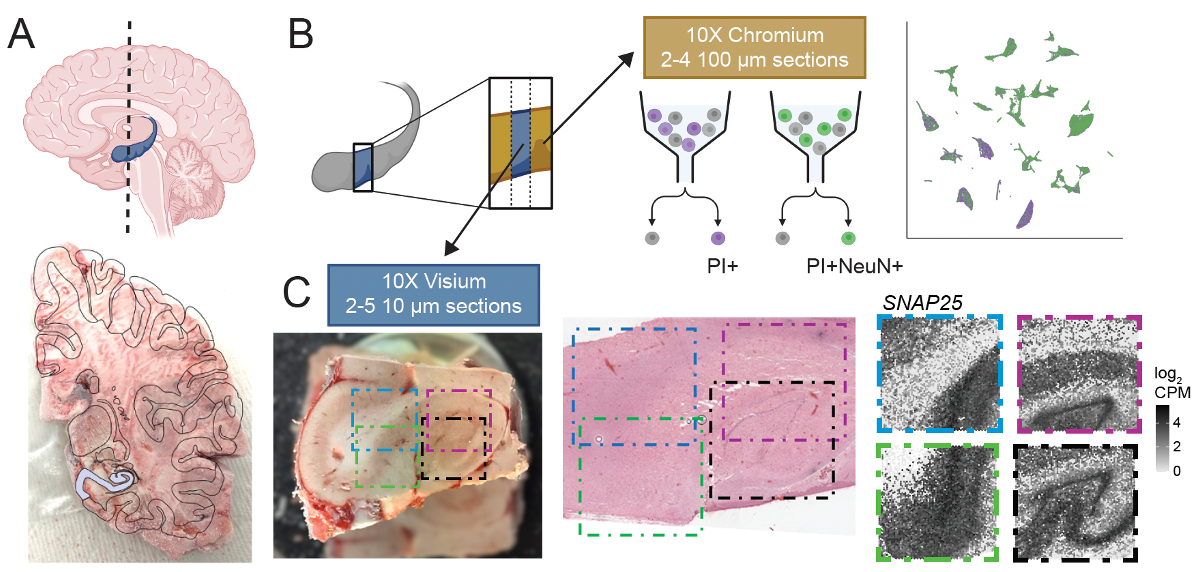
Working with spatial whole-transcriptome and human tissue NGS data during my postdoc has sharpened my statistical expertise. The increased noise due to the limitations of postmortem tissue collection, the number of batches required due to large sample sizes, and the unique methods that leverage spatial information have been unique aspects of this experience that I have welcomed. In this position I have engaged in new roles as a collaborator, helping get long-term projects to the finish line and working with graduate students to develop new statistical tools to address sources of bias.
- Thompson et al. (2025) "An integrated single-nucleus and spatial transcriptomics atlas reveals the molecular landscape of the human hippocampus." DOI: 10.1038/s41593-025-02022-0
- Shah, Hou, Thompson, Hicks (2026, under revision) "BatchSVG: identifying batch-biased genes in the application of spatially variable gene detection." DOI: 10.64898/2025.12.09.693192
I am leading a case-control study analyzing brain tissue sections from 119 donors to investigate the sex-specific interaction between mood disorder diagnosis and the distinct spatial domains of the dorsolateral prefrontal cortex. This on-going research integrates genetic risk and transcript expression to test for cell population-specific effects that will help bridge the gap between human health outcomes and disease mechanisms.
- Thompson et al. (submission date March-June 2026) "Laminar Dissection of Cortical Human Brain Gene Expression in Major Depressive and Bipolar Disorders."
Doctoral Research
During my PhD, I contributed to a large collaborative project investigating how neuronal activity promotes the functional development of neurons. My study of the regulation of gene expression during complex cellular circumstances led to a published book chapter.
- Xue et al. (2026, under revision) "Spatiotemporal Mapping and Molecular Basis of Whole-brain Circuit Maturation." DOI: 10.1101/2024.01.03.572456
- Thompson and Lin (2024) "Nature and Nurture Converge in the Nucleus to Regulate Activity-Dependent Neuronal Development." DOI: 10.1007/978-3-031-68550-7_10
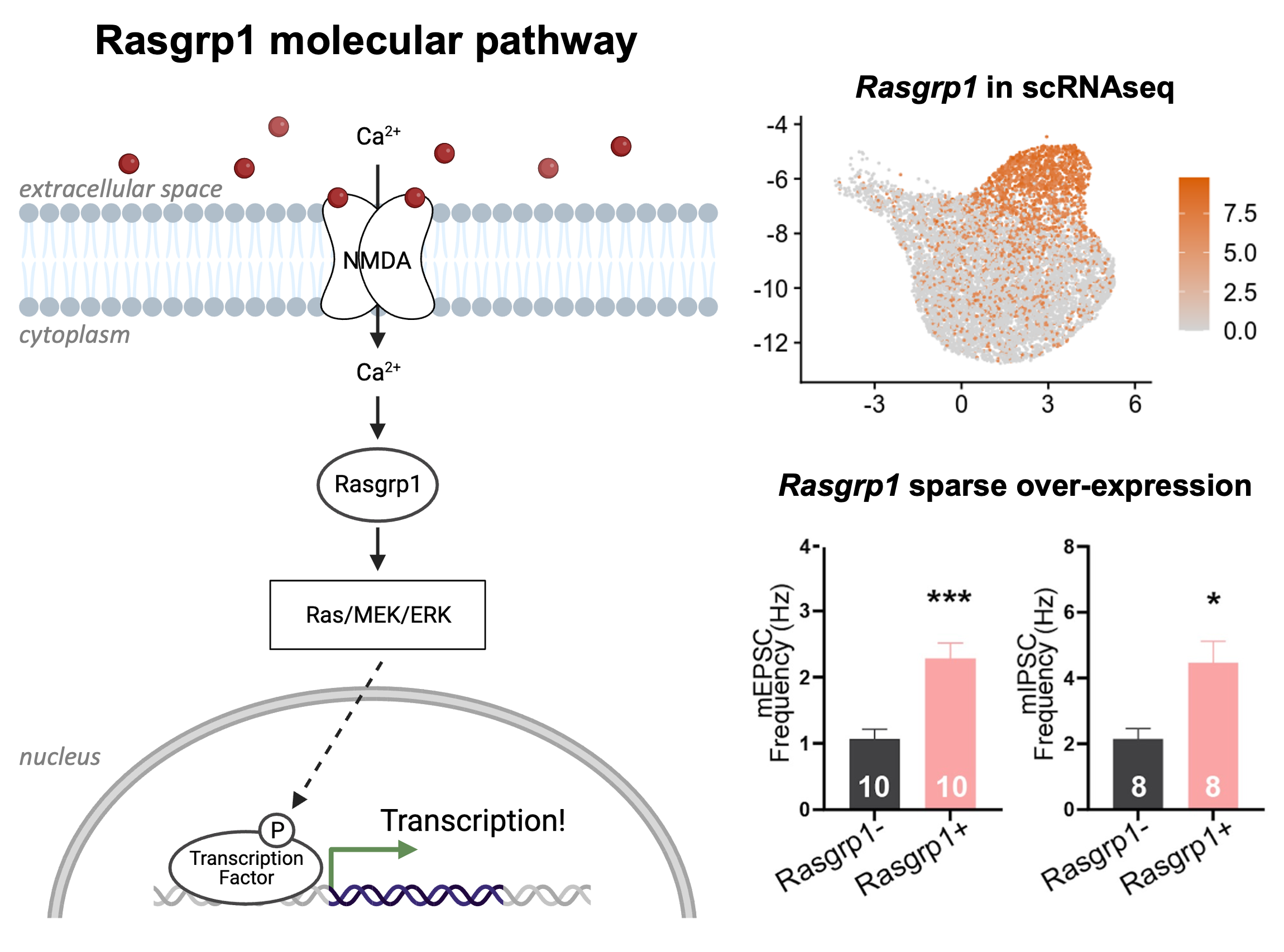
My research analyzing single-cell RNA-sequencing samples across multiple timepoints revealed specific molecular pathways involved in the activity-dependent development of dentate gyrus granule cells. From these candidate mechanisms, I identified a specific gene that follow-up experiments revealed played a role in advancing synaptic development.
- Thompson (2024) "Novel signaling pathways driving experience-dependent maturation in dentate gyrus granule cells: a deep-sequencing approach." Dissertation URI
My research expanded beyond transcriptomic read-outs to incorporating an epigenetic perspective with a multiomic study of paired RNA-sequencing and ATAC-sequencing in single-nuclei. The expanded insight available from integrative, multiomic NGS data shaped the type of research I pursue today.
Postbaccalaureate Research
My early research experience with non-human primates was part of a multi-disciplinary grant encompassing metabolic health, gestation, neurodevelopment, and behavior. These projects taught me to value and appreciate the interplay between organ systems and highlighted that there are no unimportant cell types or cell functions.
- Thompson et al. (2017) "Exposure to a high-fat diet during early development programs behavior and impairs the central serotonergic system in juvenile non-human primates." DOI: 10.3389/fendo.2017.00164
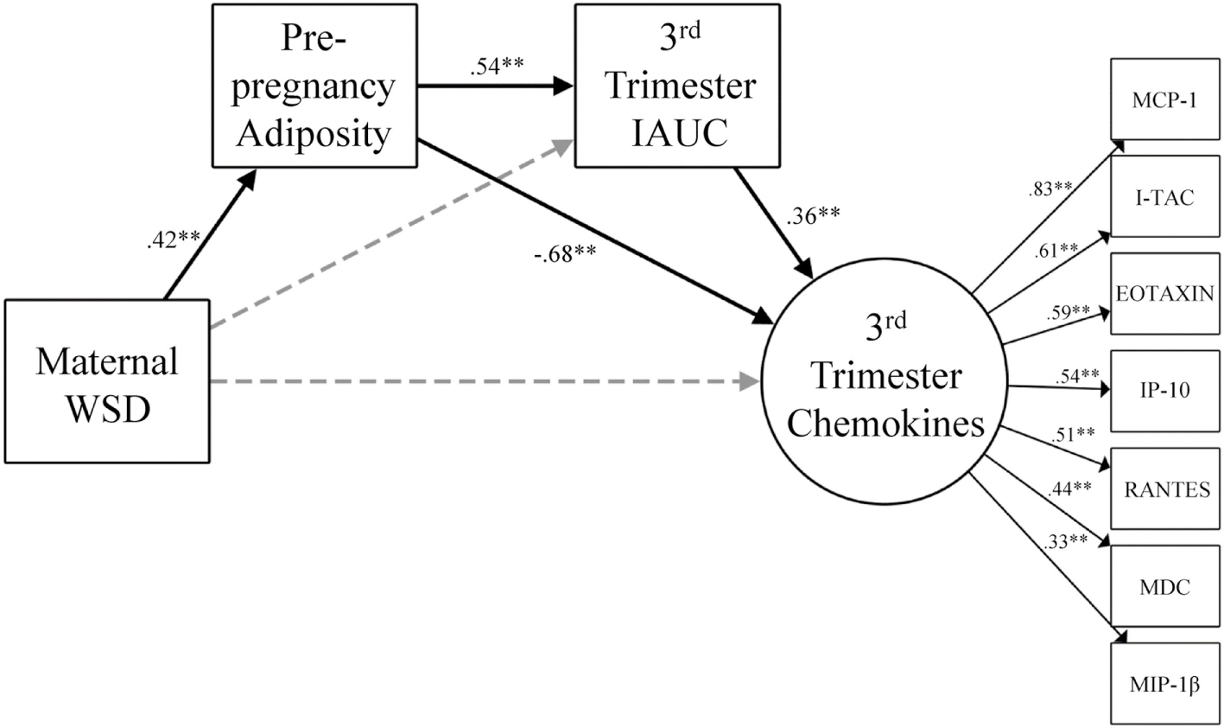
- Thompson et al. (2018) "Maternal diet, metabolic state, and inflammatory response exert unique and long-lasting influences on offspring behavior in non-human primates." DOI: 10.3389/fendo.2018.00161
My experience diving into the literature to contextualize our findings was crucial for my development as a scientist and led to becoming co-first author on a review publication. Synthesizing prior reports with novel results remains a pillar of my research approach.
- DeCapo, Thompson, Dunn, and Sullivan (2019) "Perinatal Nutrition and Programmed Risk for Neuropsychiatric Disorders: A Focus on Animal Models" DOI: 10.1016/j.biopsych.2018.08.006